


Is your calf shed winter-proof? Do the quick winter check
A good climate in calf housing cannot be taken for granted during winter. Cold, draughts and moisture together form a challenging combination that increases the risk of cold stress in calves. When calves need to use energy to maintain their body temperature, less energy remains available for growth and development.
Many dairy farmers recognise that milk production can decline slightly during the winter period. At lower temperatures, dairy cows require more energy to stay warm. They can partly compensate for this, as the rumen continuously produces heat through fermentation. Nevertheless, part of this energy is no longer available for milk production.
Calves are different. Their rumen is not yet developed as a source of heat. As a result, they are fully dependent on their environment and on the energy they take in through nutrition to stay warm. When exposed to cold, draughts or a wet lying area, this energy is quickly diverted away from growth and immunity. That is why winter-proof calf housing is essential.
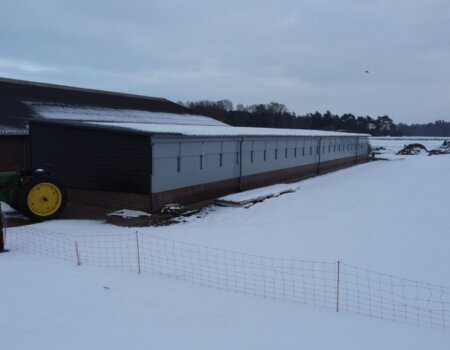
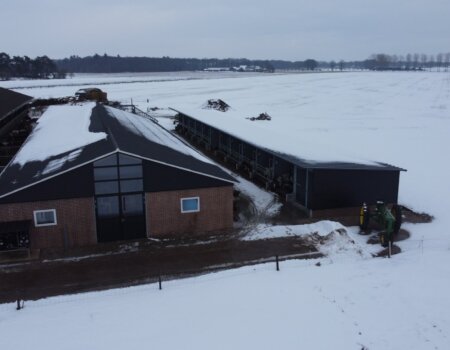
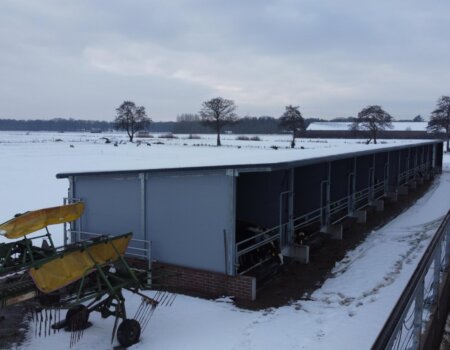
Do the quick winter check for calves
Go through these points regularly during cold periods. Even small adjustments can often make a big difference.
1. Are the calves lying warm and dry?
Calves lose a lot of heat through the belly when lying down.
-
Is there enough dry straw bedding in the pen?
-
Do your knees stay dry during the knee test?
-
Are the calves insulated from the cold floor?
2. Is there draught at calf level?
Not the temperature itself, but especially air speed determines heat loss.
-
Do you feel air movement at calf level?
-
Are there gaps, cracks or openings?
3. Are the calves protected from wind and precipitation?
Wind and moisture increase the cold stress effect.
-
Is the housing protected from wind?
-
Does rain or snow enter the housing?
-
Is the roof construction strong enough to support snow load?
-
Are the sidewalls and roof overhang sufficiently long?
4. What do the calf’s coat and posture look like?
-
Is the coat rough or raised?
-
Are calves lying curled up?
This is a sign of self-protection: the calf is trying to conserve body heat.
5. Do calves receive sufficient energy from feed and water?
Cold conditions increase energy requirements.
-
How is feed intake?
-
Do young or weaker calves need extra support?
-
Are drinking bowls free from ice?
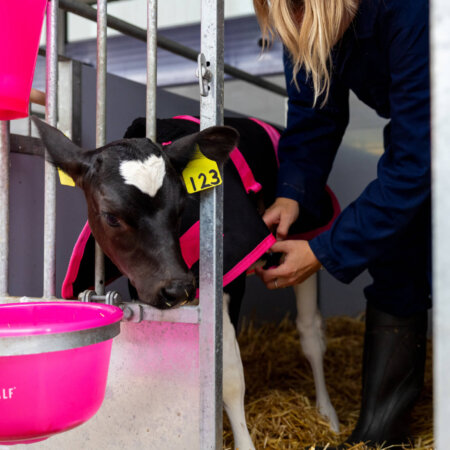
Frozen or very cold drinking water reduces water intake and, as a result, also feed intake. During winter, a circulation system can help keep drinking water frost-free and better available.
Cold stress is often not immediately visible, but it does become noticeable in calf growth. If you identify attention points during this winter check, that is the right moment to make adjustments. The better the climate, the more energy calves can use for growth and development.
And remember: at temperatures below 10 °C, a calf blanket can already make a big difference — provided that the basics are in place: lying comfort, housing climate and nutrition.