


The old boxes were good, but now that I work with the new ones, I really notice the difference – Sandra Meijer on her experience with the new Topcalf calf boxes
Sandra has been working with Topcalf calf boxes for many years. “When we first took over the farm from my in-laws, there were Mono and Duo boxes. That actually worked just fine.” Why they originally chose Topcalf? They purchased the boxes through their local dealer, Schrijver Stalservice. “We worked with them more often, everything always looked neat, and once you have something that works well, you don’t quickly look for something else.” Recently, they added a Duo XL. “The new calf box really has a lot of advantages, that’s for sure.”
Sandra and her partner Arno run the dairy farm they took over from Arno’s parents. On the farm, Sandra is responsible for the youngest calves, from birth up to about five to six months. The bull calves are generally sold after about fourteen days. In addition to working on the farm, Sandra works as a nurse in a hospice. Care is very important to her, both for the young livestock on the farm and in her work outside of it.
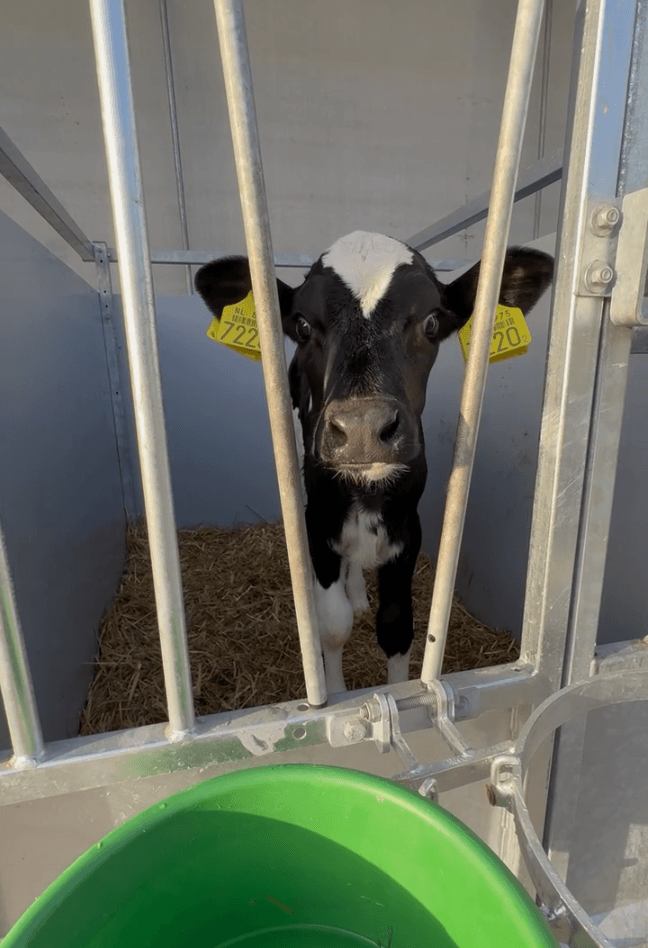
More space and future-oriented calf housing
“The first thing I noticed when the new calf box arrived, I thought: wow, that’s big,” Sandra laughs. The new dimensions have been designed with the future in mind. “I had to get used to it at first, but it’s actually great that they are a bit higher. The calves can’t just jump over them anymore.” She also sees clear benefits for the calves. “They now have more freedom of movement and can turn around a bit more easily in the pen.”
Practical improvements in daily work
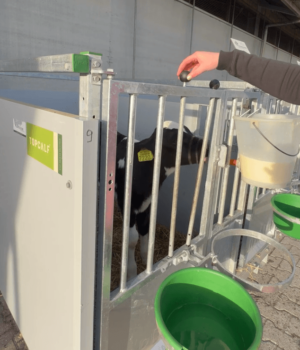
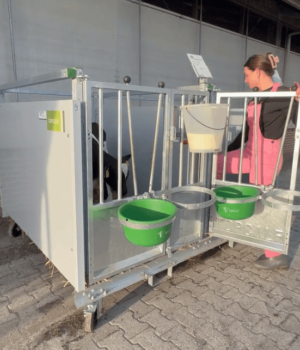
Besides the extra space, it’s mainly the practical improvements in day-to-day work that stand out. “The slats are a bit closer together, so the straw doesn’t fall through as quickly. That saves on bedding.” According to Sandra, even the smallest details have been improved. “I really like that there are two doors. When the calf is drinking from the teat bucket, you can simply access the box without disturbing it.”
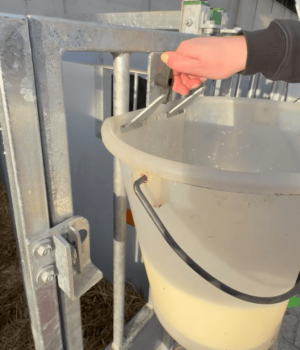
It’s often the small things that make the difference, she notes. “For example, the locking pins in the front gate, where the calves put their heads through to be secured. In the old boxes, they were loose and I would sometimes lose them. Then they would end up in the pen because the calf had been playing with them. I was always glad the calf hadn’t escaped through the large opening.” In the new boxes, this has been resolved. “Now they can’t get out anymore—that’s really ideal.”
Developed from practical experience
The improvements clearly reflect real-life use. “The issues we used to run into have now been solved.” Sometimes you only realize that afterwards. “You get used to how things are, but when something changes, you think: oh yes, this is much more convenient.” Another advantage she mentions is the hook on the bucket holder, which prevents feed or water buckets from being knocked out. “And what I also like is that the door can now be opened even when the feed and water buckets are attached. That wasn’t possible with the old ones.”
Flexible working with duo and group housing
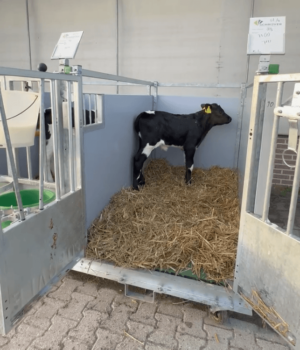
Once the calves reach the appropriate age, the option to convert the Duo box into a group pen is used. “It’s really nice that you can house the calves together, but we first check whether both are drinking well.” Calves kept in pairs definitely benefit from each other. “Even when they are housed individually, you often see them putting their noses together through the viewing opening to make contact.”
When the calves become too old for the calf boxes, they move on to a group pen. That’s when it’s time to clean out the boxes. “In the past, we had to roll the boxes outside. Now we can easily lift them with the loader.” This makes a big physical difference, because after one cycle there is a substantial amount of straw in the box, making it significantly heavier.
Ready for the future of calf housing
Looking ahead, Sandra and Arno sometimes think about what the future may bring. “If we need to keep the calves longer in the future, we see mobile group housing as a very good solution.” For now, that’s not yet necessary. “But it’s reassuring to know that we can easily expand our calf housing when needed.”
With insights from practical experience, Topcalf continues to develop its calf housing systems. This results in solutions that make daily work easier for farmers and contribute to a strong start for every calf.